This history is restricted to England: the formation of England, the development of the English language, and documented English institutions, practices and customs.
Old English writing, English law codes and English church institutions are recorded before the political unification of the Kingdom of England in the tenth century.
The chapters follow that development chronologically.
Before England existed: roughly AD 410–600
When Roman imperial government withdrew in the early fifth century, there was no country called England. (english-heritage.org.uk)
From roughly the middle of the fifth century, Germanic-speaking people settled in parts of what is now England. The surviving evidence does not establish one simple or uniform process of migration and settlement. English Heritage describes the evidence for the fifth and sixth centuries as sparse and records Germanic-speaking settlement alongside the formation of several kingdoms. (english-heritage.org.uk)
The British Library dates the development of Old English to approximately the middle of the fifth century. It developed from the related Germanic dialects brought by those migrants. The earliest surviving English consists of very short runic inscriptions. The earliest substantial English text that can be associated with a known period is the law code of Æthelberht, king of Kent, who ruled approximately 589–616—although the surviving manuscript containing it was copied much later, in the 1120s. (bl.uk)
Æthelberht's original sixth-century manuscript does not survive. The surviving evidence is a medieval copy of a law code whose text is attributed to his reign. (bl.uk)
Early English culture in archaeological evidence
Sutton Hoo in Suffolk dates from the early seventh century, when separate English kingdoms were developing and before a unified England existed. (britishmuseum.org)
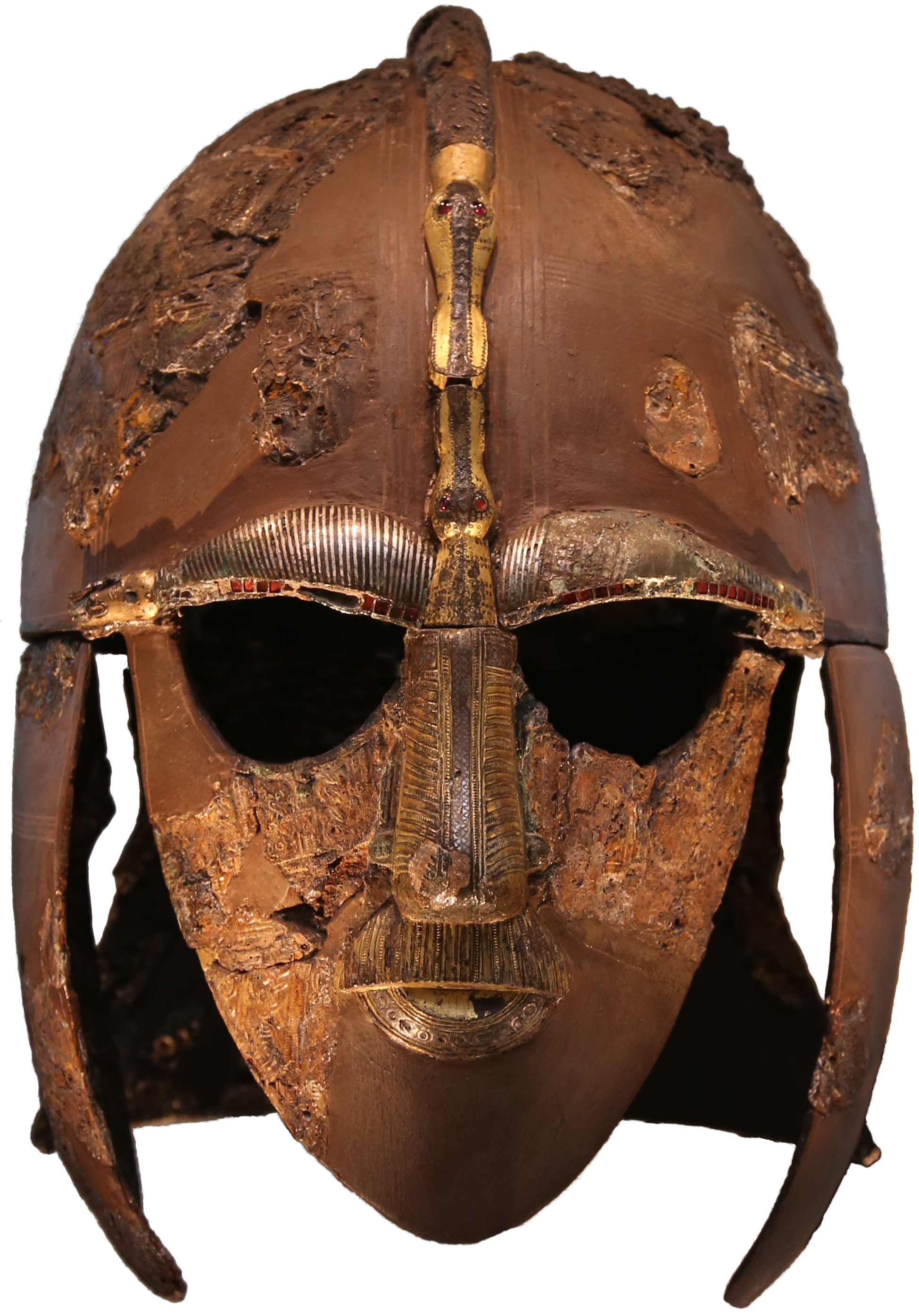

The ship burial contained weapons, drinking and feasting equipment, textiles, jewellery, gold coins, Byzantine silverware, cauldrons and other objects. The British Museum dates the burial approximately to the early 600s and stresses that it belonged to the East Anglian kingdom, not a unified England. (britishmuseum.org)
The weapons, feasting equipment, precious metalwork, imported objects and scale of the burial provide archaeological evidence of elite rank, warrior equipment, ceremonial feasting, funerary practice, skilled craftsmanship and long-distance exchange. (britishmuseum.org)
The British Museum identifies the burial as that of an exceptionally powerful individual; it is evidence for elite culture rather than a complete record of ordinary life. (britishmuseum.org)
Christianity and English kingdoms: 597 onward
Many incoming Anglo-Saxon communities initially practised non-Christian religions. Christianity nevertheless survived among parts of the Romano-British population. (churchofengland.org)
In 597, a mission headed by Augustine arrived in Kent from Rome. English rulers subsequently converted, while Christianity also spread into northern England through missionaries connected with Irish Christian traditions. English Heritage says that from 597 English rulers were converted by Roman or Irish missionaries and that within a century a flourishing English church had emerged. (english-heritage.org.uk)
The Church of England's historical account similarly describes three streams contributing to the medieval English church: the Roman mission, remnants of Romano-British Christianity and northern Christianity associated with figures such as Aidan and Cuthbert. The Synod of Whitby in 664 was an important point in aligning English church practice more closely with Roman usage. (churchofengland.org)
Christian conversion was accompanied by the construction of churches and monasteries and by the production and preservation of manuscripts. Latin was used in worship and learning while Old English continued to be spoken and was increasingly written. (english-heritage.org.uk)
Old English writing and literature
Christian literacy initially relied heavily on Latin, but English increasingly became a written language. Cædmon's Hymn is attributed by Bede to seventh-century Northumbria, although its surviving manuscript witnesses are later. Other surviving Old English texts include prayers, biblical translations, legal texts, historical material, scientific works and poetry. (bl.uk)
The British Library dates the surviving manuscript of Beowulf to around AD 1000. (bl.uk)


English acquired a substantial written tradition alongside Latin. The British Library preserves examples of Old English prayer, law, history and biblical material from this period. (bl.uk)
Scandinavian conquest, settlement and the formation of England
English Heritage records that when Scandinavian Viking forces began attacking in the late eighth century, England did not yet exist. (english-heritage.org.uk)
The attack on Lindisfarne occurred in 793. More sustained Scandinavian conquest followed. In 865 a major Viking army arrived. Northumbria, East Anglia and much of Mercia eventually fell under Scandinavian domination while Wessex survived. (english-heritage.org.uk)
Old Norse left extensive traces in northern and eastern England. English Heritage gives examples such as place-name endings -by and -thorpe, and words including window, husband, egg, and skull. Northern terms including beck and fell also derive from Old Norse. (english-heritage.org.uk)
Archaeological evidence from towns under Scandinavian rule or settlement, including York, records manufacturing, trade and imported goods. (english-heritage.org.uk)
The political unification of England: roughly 878–954
Alfred of Wessex defeated the Viking army at Edington in 878. His successors then gradually reconquered territories previously under Scandinavian control. (english-heritage.org.uk)
Edward the Elder and his sister Æthelflæd expanded control during the early tenth century. Edward's son Æthelstan subsequently captured York. (english-heritage.org.uk)
In 927 Æthelstan took York and became the first king to rule the territories conventionally identified as the unified Kingdom of England. Control of York was subsequently contested. Independent Scandinavian kingship there ended in 954, during the reign of Eadred. (english-heritage.org.uk)
The British Museum holds a silver penny minted for Æthelstan at Chester and catalogues his authority as king of England. (britishmuseum.org)
Viking wars and English political unification
English Heritage records repeated Viking attack and conquest, the collapse of several older kingdoms, Wessex's survival, fortification and military reorganisation, followed by systematic reconquest. It presents the Viking crisis and the coordinated response to it as central to the political unification of England. (english-heritage.org.uk)
English Heritage records the use of royal law codes, a reformed coinage, church networks and royal administration in the unified kingdom. (english-heritage.org.uk)
England around AD 1000
By around 1000 England had a king, English law codes, counties and local assemblies, an English church, Old English literature, royal coinage and royal administration. (english-heritage.org.uk)
One old political practice was the Witan, in which kings summoned leading nobles and churchmen for advice and consent. Local assemblies—the moots—dealt with affairs and disputes. (parliament.uk)
Parliament's historical archive describes the Witan and the moot as important Anglo-Saxon governmental institutions from approximately the eighth to eleventh centuries. It stresses that the Witan was not a modern parliament: the king selected those attending, and their principal function was advice and consent rather than independently making legislation. (parliament.uk)
The Norman Conquest of the existing Kingdom of England
When William of Normandy invaded in 1066, England was an existing kingdom. (nationalarchives.gov.uk)
The Normans replaced much of the upper elite, redistributed land, erected castles and reorganised powerful positions in the church. (nationalarchives.gov.uk)


William ordered the Domesday inquiry in 1085–86. It recorded who held land, what it was worth and—in many cases—who had held it before 1066. The National Archives describes it as direct evidence of the transformational effect of the Norman victory and says its records cover approximately 13,000 settlements and 270,000 inhabitants. (nationalarchives.gov.uk)
The English language after 1066
English remained widely spoken. Norman French was used particularly by the ruling elite and at court, while Latin continued in church and written government. (english-heritage.org.uk)
English Heritage notes that after 1066 the court and official functions moved substantially toward Anglo-Norman French. (english-heritage.org.uk)
Over succeeding centuries English absorbed French vocabulary, including words associated with government, law, aristocracy, fashion, warfare and cuisine. During this period Old English developed into what linguists call Middle English. (english-heritage.org.uk)
Modern English is classified as a Germanic language and contains extensive vocabulary derived from French and Latin. (english-heritage.org.uk)
Personal names after 1066
English Heritage notes that names associated with Norman French culture—such as William, Robert and Henry—became increasingly common, while many earlier Anglo-Saxon personal names declined. Surnames also became increasingly established after the conquest. (english-heritage.org.uk)
Royal justice and Magna Carta
Magna Carta was issued in 1215 during a political conflict between King John and sections of the baronage. Parliament records that it was designed to protect baronial rights against royal power rather than to create democratic rights for the whole population. (parliament.uk)
But particular principles subsequently acquired much wider importance, especially limits on arbitrary royal action and requirements surrounding taxation and lawful procedure. Parliament's historical service says Magna Carta's clauses helped underpin principles that developed in English law during the fourteenth through seventeenth centuries, while provisions concerning consent to taxation contributed to the development of Parliament. (parliament.uk)
Middle English England, c.1100–1500
Many Old English inflectional endings were reduced or lost at different rates in different regions. The University of Edinburgh's Linguistic Atlas of Early Middle English documents inflectional and regional variation in texts dating from approximately 1150 to 1325. (ed.ac.uk)
Geoffrey Chaucer wrote the Canterbury Tales in Middle English late in the fourteenth century. (britishlibrary.cn)
In 1476 William Caxton introduced the printing press into England. The British Library records that his early English publications included editions of Chaucer's Canterbury Tales. (britishlibrary.cn)
Printing enabled texts to be reproduced in larger numbers and more uniform copies than manuscript copying. Caxton's editions circulated English works through the new medium. (britishlibrary.cn)
The English Reformation: 1530s–1600
Until the sixteenth century the English church recognised papal authority. (churchofengland.org)
Under Henry VIII this relationship was broken. Under Edward VI the changes became markedly more Protestant; under Mary many Catholic practices were restored; under Elizabeth Protestant settlement was re-established. (churchofengland.org)
English Heritage documents how, between roughly 1538 and 1558, images and shrines were removed or destroyed, wall paintings were whitewashed, religious furnishings changed and services increasingly moved from Latin into English. The Book of Common Prayer, introduced in 1549, organised English-language worship. (english-heritage.org.uk)
A surviving 1549 letter from Edward VI to the Bishop of London criticises him for not ensuring conformity with the new worship arrangements. (nationalarchives.gov.uk)
Surviving documents record resistance and disputes over the Prayer Book. In 1572, for example, Parliament debated attempts to alter its compulsory ceremonies because some Protestant reformers thought it still contained too much inherited Catholic practice. (nationalarchives.gov.uk)
English becomes a language of worship
English Heritage records a Reformation transition from Latin Mass toward English services centred on scripture, sermons and set prayers. (english-heritage.org.uk)
The Church of England after the Elizabethan settlement
The Church of England records that Elizabeth I's settlement retained bishops and ancient creeds while adopting Protestant theology. (churchofengland.org)
The seventeenth century produced further conflict. During the Commonwealth the episcopal Church of England was suppressed and its Prayer Book prohibited; both returned with the restoration of the monarchy in 1660. The Toleration Act of 1689 subsequently gave greater legal space to certain Protestant groups outside the established church. (churchofengland.org)
The Church of England nevertheless remained—and remains—the established church in England. (churchofengland.org)
England after 1707
Until 1 May 1707, England was an independent kingdom. The Acts of Union joined the kingdoms of England and Scotland as the Kingdom of Great Britain and ended the separate English and Scottish Parliaments on that date. (parliament.uk)
Industrialisation in England, c.1750–1900
Historic England describes England at the end of the seventeenth century as overwhelmingly rural. It estimates the population at about 6 million in 1700 and nearly 16 million by 1841, and records a major shift toward the north alongside the rise of industrial production, powered textile machinery, iron production, steam power and the factory system. (historicengland.org.uk)
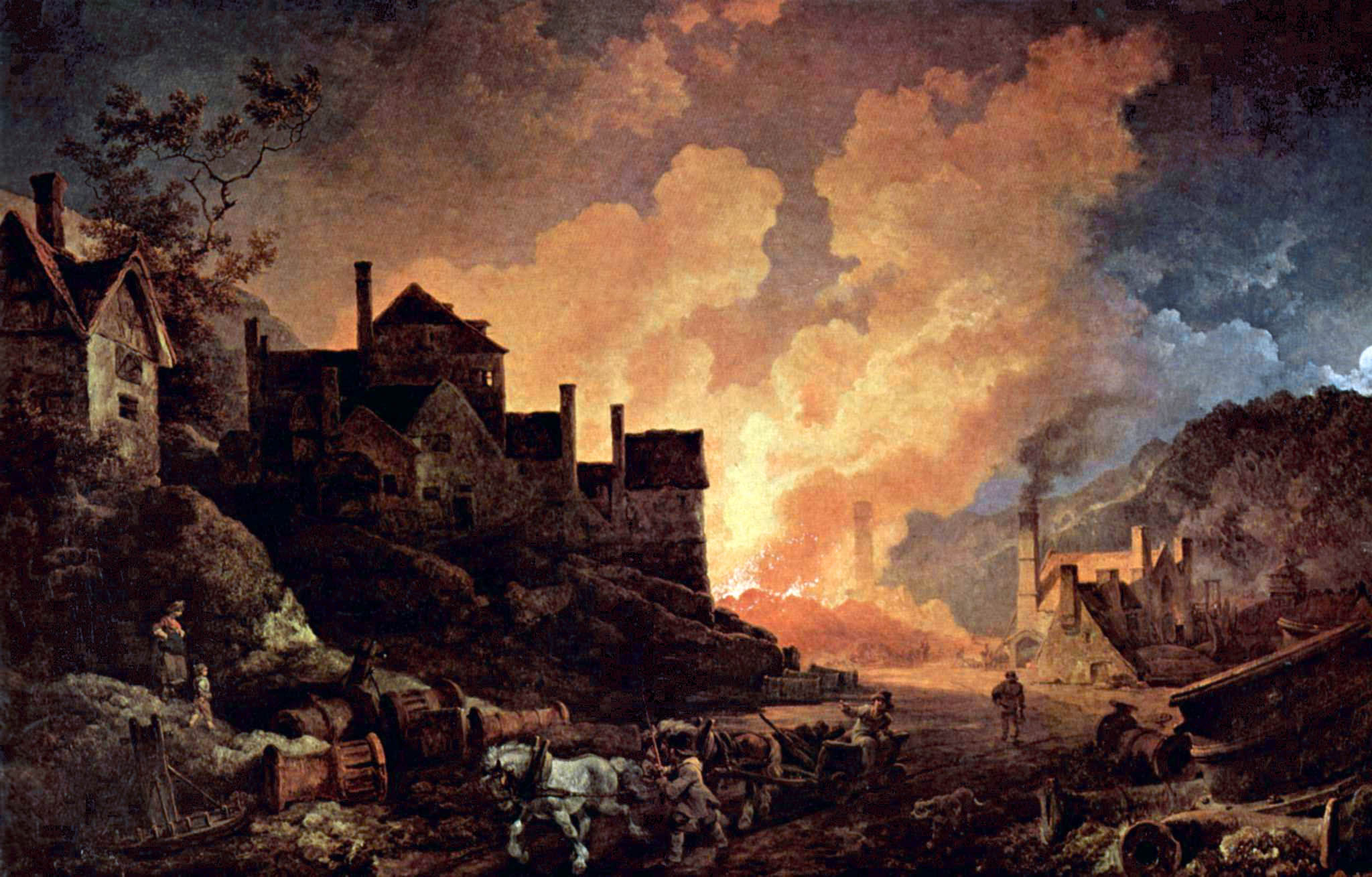

Factory production increasingly gathered large numbers of workers together at one site and organised production systematically around machinery and fixed processes. Historic England explicitly describes the factory system as a disciplined, systematised form of production bringing numerous powered processes together. (historicengland.org.uk)
Industrial towns expanded in Lancashire, Yorkshire and the Midlands as textile production, ironworking and other industries grew. (historicengland.org.uk)
The English public house
Alehouses, inns and taverns existed in England before industrialisation. (historicengland.org.uk)
Historic England describes pubs as important community social spaces and notes that more than 11,000 current or former pubs, inns, taverns and gin palaces appear on England's National Heritage List. (historicengland.org.uk)
Historic England records that contemporary pubs face changing drinking patterns, working patterns, competing entertainment and redevelopment pressure, while some have adapted by offering community services, meeting rooms and other functions. (historicengland.org.uk)
School boards, compulsory attendance and literacy
The Elementary Education Act of 1870 established locally elected school boards to provide elementary schools where existing provision was inadequate in England. Compulsory attendance followed in 1880 for children aged five to ten, with the school-leaving age subsequently raised. (parliament.uk)
Historic England links the resulting expansion of schooling to growing basic literacy and the expansion of the popular press. (historicengland.org.uk)
School attendance placed increasing numbers of children within institutions teaching reading, writing, arithmetic and other prescribed subjects. (historicengland.org.uk)
The codification of football
The National Football Museum records that before the mid-nineteenth century English towns, schools and clubs used different versions of football rules. It records rules produced at Cambridge in 1856 and by Sheffield Football Club in 1858. (nationalfootballmuseum.com)
Then in 1863, the newly formed Football Association agreed thirteen laws intended to provide a common code. The National Football Museum preserves and documents this development. (nationalfootballmuseum.com)
The 1863 laws provided a common code, although the National Football Museum records that different codes continued to be used and amended afterward. (nationalfootballmuseum.com)
Mass leisure in the late nineteenth and twentieth centuries
Historic England notes that shorter working hours and late-Victorian bank holidays expanded working people's leisure opportunities. Paid holidays expanded during the twentieth century, and football and cinema became major mass recreational activities in England. (historicengland.org.uk)
Documented continuities in English institutions and customs
The Church of England remains the established church in England. (churchofengland.org)
More than 11,000 current and former pubs, inns, taverns, gin palaces and other drinking establishments are recorded on the National Heritage List for England. Historic England describes pubs as social spaces within local communities. (historicengland.org.uk)
The Football Association's laws of 1863 form part of the documented history of the organised game, although those laws were amended as football developed. (nationalfootballmuseum.com)
Chronology of the development of England and English culture
c. 450 onward: related Germanic dialects developed into Old English in communities in parts of England.
597–664: Augustine's mission reached Kent in 597; English rulers subsequently converted; the Synod of Whitby met in 664.
Eighth to tenth centuries: Scandinavian attacks, conquest and settlement affected English kingdoms, towns, place-names and vocabulary.
927: Æthelstan took York and ruled the territories conventionally identified as the unified Kingdom of England.
954: independent Scandinavian kingship at York ended during the reign of Eadred.
Eleventh century: England possessed royal government, law codes, coinage, counties, local assemblies, an English church and a written Old English tradition.
1066 onward: Norman rule changed the landholding elite, castles, church leadership, government and the vocabulary of English.
1215–1476: Magna Carta was issued in 1215; Chaucer wrote the Canterbury Tales late in the fourteenth century; Caxton introduced the printing press into England in 1476.
Sixteenth and seventeenth centuries: the Reformation changed English worship, church interiors, religious language and the legal position of the Church of England.
From 1707: England ceased to be a separate sovereign kingdom but continued as a country with English institutions, customs and regional cultures.
Eighteenth and nineteenth centuries: industrial production and towns expanded; Parliament's 1870 Education Act established local school boards where provision was inadequate; the Football Association agreed thirteen laws in 1863.
Twentieth century: paid holidays expanded, while cinema and football became major forms of mass recreation in England.
Surviving Old English writing and law codes predate the political unification of England in the tenth century.
Works cited
References
Institutional and curatorial sources cited throughout the historical text. Links lead directly to the relevant collection, archive or historical record.
- British Museum. “The Anglo-Saxon ship burial at Sutton Hoo.” https://www.britishmuseum.org/collection/death-and-memory/anglo-saxon-ship-burial-sutton-hoo
- British Museum. “Helmet from the Sutton Hoo ship burial.” https://www.britishmuseum.org/collection/object/H_1939-1010-93
- British Museum. “Penny of Æthelstan.” https://www.britishmuseum.org/collection/object/C_1839-1214-111
- British Library. “The oldest English writing in the British Library.” https://www.bl.uk/stories/blogs/posts/the-oldest-english-writing-in-the-british-library
- British Library. “Beowulf.” https://www.bl.uk/collection-items/beowulf
- British Library. “The Canterbury Tales.” https://www.britishlibrary.cn/en/works/canterbury-tales/
- Church of England. “History of the Church of England.” https://www.churchofengland.org/about/history-church-england
- Church of England. “What does it mean to be the established Church?” https://www.churchofengland.org/media/stories-and-features/what-does-it-mean-church-england-established-church
- English Heritage. “Early Medieval: Introduction.” https://www.english-heritage.org.uk/learn/story-of-england/early-medieval/introduction/
- English Heritage. “An Introduction to Roman Britain.” https://www.english-heritage.org.uk/learn/story-of-england/romans/introduction/
- English Heritage. “The History of Vikings in England.” https://www.english-heritage.org.uk/visit/inspire-me/the-history-of-Vikings-in-england/
- English Heritage. “Tracing the languages that built England.” https://www.english-heritage.org.uk/visit/inspire-me/tracing-the-languages-that-built-england-across-english-heritage-sites
- English Heritage. “The Story of 1066: names.” https://www.english-heritage.org.uk/learn/teaching-resources/story-of-1066/collectible-6/
- English Heritage. “Tudor Religion.” https://www.english-heritage.org.uk/learn/story-of-england/tudors/religion/
- Historic England. “Industrial Buildings: Listing Selection Guide.” https://historicengland.org.uk/images-books/publications/dlsg-industrial/heag134-industrial-buildings-lsg/
- Historic England. “England's Historic Pubs.” https://historicengland.org.uk/advice/caring-for-heritage/englands-historic-pubs/
- Historic England. “Protecting Historic Pubs.” https://historicengland.org.uk/advice/caring-for-heritage/englands-historic-pubs/protecting-historic-pubs/
- Historic England. “England's Schools.” https://historicengland.org.uk/images-books/publications/englands-schools/englands-schools/
- Historic England. “Leisure.” https://historicengland.org.uk/images-books/publications/leisure/
- National Football Museum. “The Laws of the Game, 1863.” https://nationalfootballmuseum.com/items/the-laws-of-the-game-1863/
- University of Edinburgh, Angus McIntosh Centre for Historical Linguistics. “A Linguistic Atlas of Early Middle English.” https://www.amc.lel.ed.ac.uk/amc-projects-hub/project/laeme/
- The National Archives. “Domesday Book.” https://www.nationalarchives.gov.uk/explore-the-collection/explore-by-time-period/medieval/domesday/
- The National Archives. “Domesday Book: education resource.” https://www.nationalarchives.gov.uk/education/resources/domesday-book/
- The National Archives. “Edmund Bonner criticised.” https://www.nationalarchives.gov.uk/education/resources/the-english-reformation-c1527-1590/edmund-bonner-criticised/
- The National Archives. “Book of Common Prayer.” https://www.nationalarchives.gov.uk/education/resources/the-english-reformation-c1527-1590/book-of-common-prayer/
- UK Parliament. “Origins of Parliament.” https://www.parliament.uk/about/living-heritage/evolutionofparliament/originsofparliament/birthofparliament/overview/origins/
- UK Parliament. “Magna Carta.” https://www.parliament.uk/about/living-heritage/evolutionofparliament/originsofparliament/birthofparliament/overview/magnacarta/
- UK Parliament. “Magna Carta: Legacy.” https://www.parliament.uk/about/living-heritage/evolutionofparliament/originsofparliament/birthofparliament/overview/magnacarta/magnacartalegacy/
- UK Parliament. “Act of Union 1707.” https://www.parliament.uk/about/living-heritage/evolutionofparliament/legislativescrutiny/act-of-union-1707/
- UK Parliament. “The 1870 Education Act.” https://www.parliament.uk/about/living-heritage/transformingsociety/livinglearning/school/overview/1870educationact/
Image credits and records
- Geni. “Sutton Hoo helmet 2016.” Wikimedia Commons, CC BY-SA 4.0. https://commons.wikimedia.org/wiki/File:Sutton_Hoo_helmet_2016.png; licence: https://creativecommons.org/licenses/by-sa/4.0/
- British Library. “Beowulf, Cotton MS Vitellius A XV, f. 132r.” Wikimedia Commons, public-domain reproduction. https://commons.wikimedia.org/wiki/File:Beowulf_Cotton_MS_Vitellius_A_XV_f._132r.jpg
- The National Archives. “Domesday Book — Warwickshire.” Wikimedia Commons, public-domain reproduction. https://commons.wikimedia.org/wiki/File:Domesday_Book_-_Warwickshire.png
- Philip James de Loutherbourg. Coalbrookdale by Night (1801). Wikimedia Commons, public-domain reproduction. https://commons.wikimedia.org/wiki/File:Philipp_Jakob_Loutherbourg_d._J._002.jpg; Art UK record: https://artuk.org/discover/artworks/coalbrookdale-by-night-179866